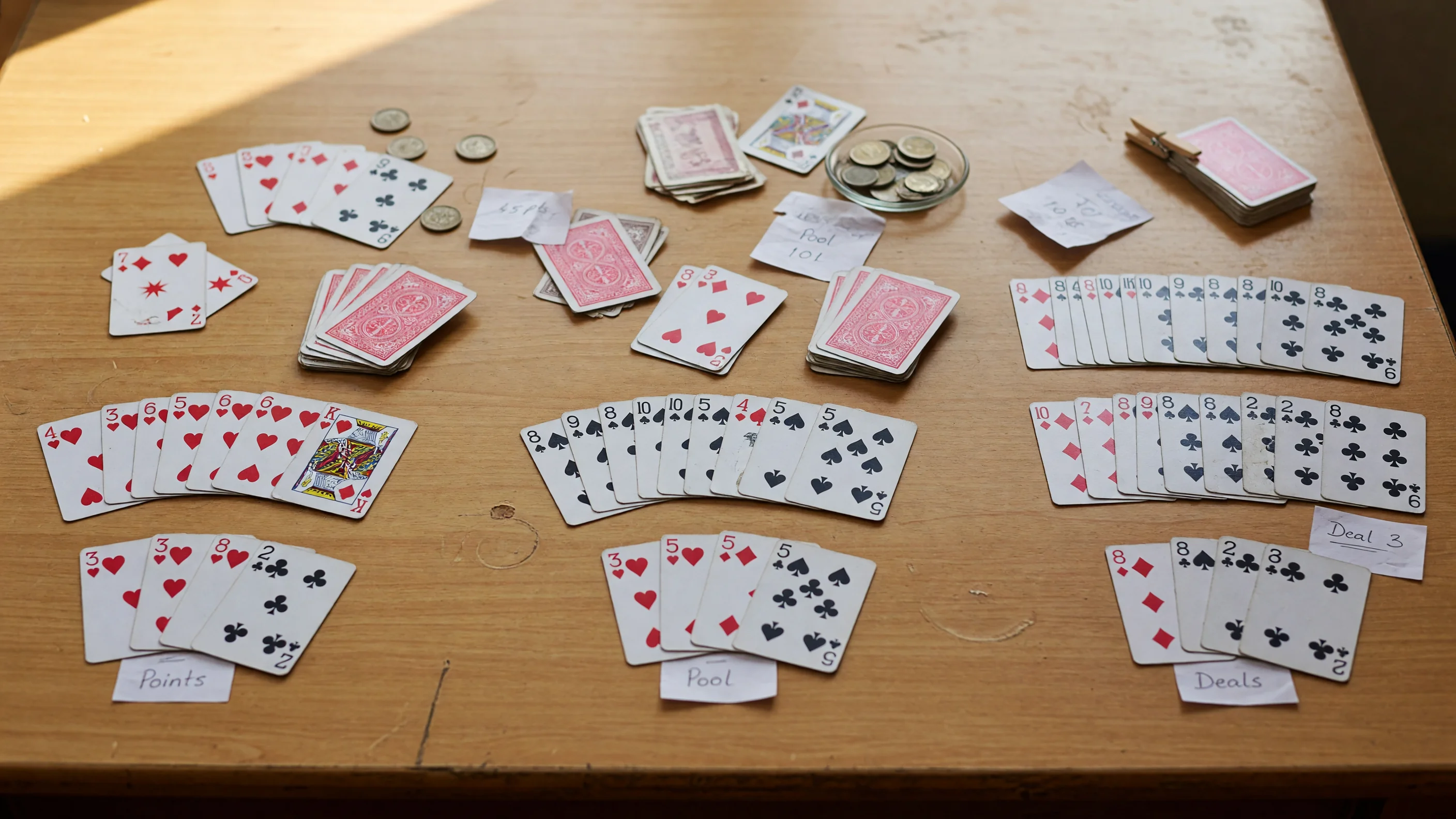
Indian 13-card rummy is one rule book read three ways. The melds are identical — pure sequence, impure sequence and set — but the round structure and the score penalty turn the same cards into a different game. A new player usually starts on Points Rummy because the math is the simplest and the session is the shortest; an intermediate player moves to Pool for the round-based play; the more competitive regulars keep Deals in rotation because the round limit forces a tighter tempo.
Points Rummy — one deal, one score
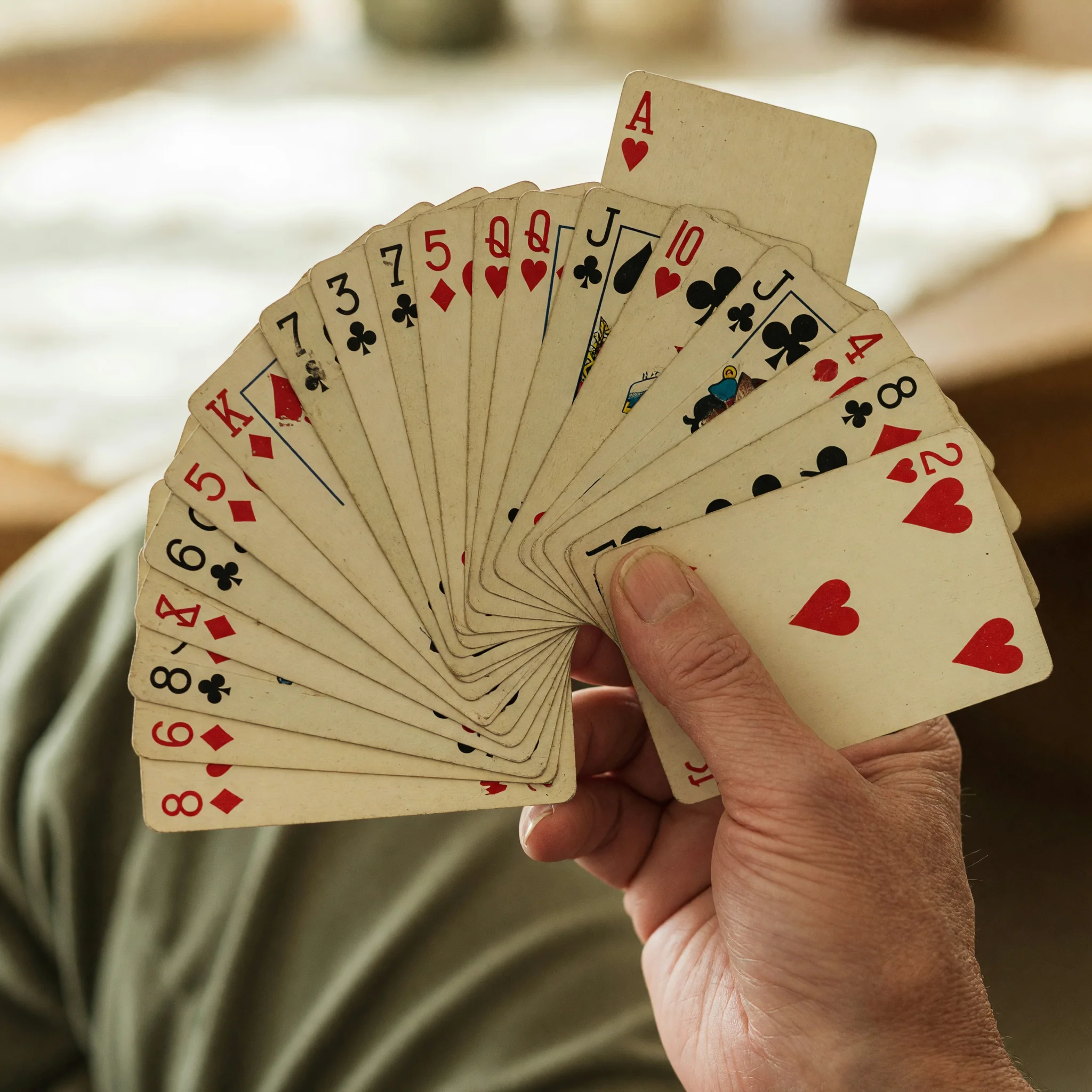
Points Rummy is a single-deal format with a hard score limit — usually 101 or 201 points. Each round begins with thirteen cards each, one card flipped open as the first discard, and the rest of a closed stock laid face-down. Players take turns picking from the open pile or the closed stock, melding what they can, and discarding one card face-up.
The score penalty is the deadwood count — the value of unmatched cards in your hand at the moment someone declares. A first drop costs 25 points; a middle drop costs 50; a full count is the actual face-value of your unmatched cards up to the limit. Most rooms cap deadwood at 80, so a full count is 80 points regardless of how bad your hand actually was.
Points Rummy sessions are short — five to fifteen minutes a hand — and the variance is high. Beginners learn the melds in this format because each hand ends quickly and the consequences of a mistake are visible within the same round.
Pool Rummy — fixed rounds, fixed buy-in
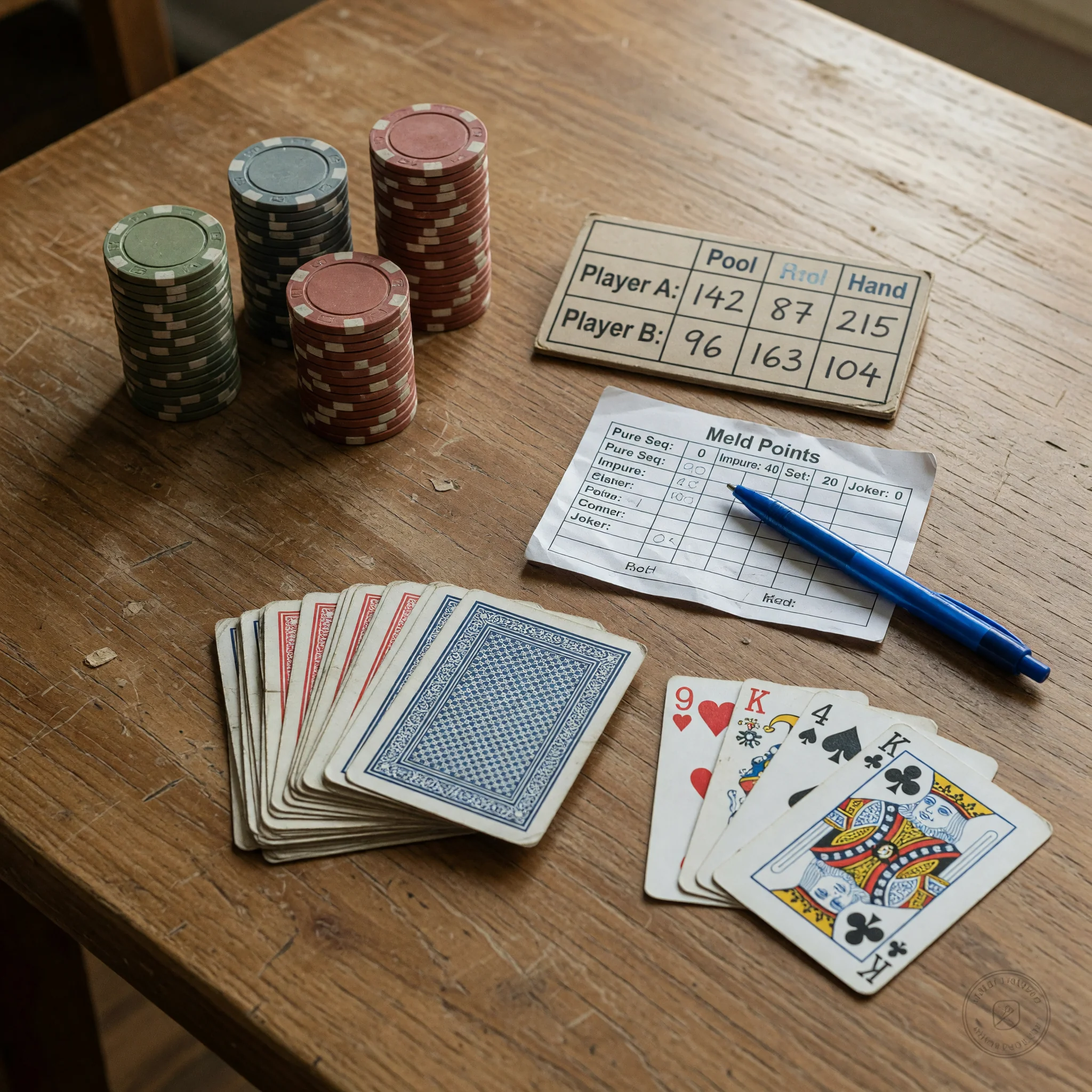
Pool Rummy is the round-based format. Every player at the table buys in for the same amount, the round count is fixed (commonly 101 or 201 points), and a player who crosses the elimination threshold is knocked out. The last player left standing wins the pool minus an operator fee, typically around ten per cent.
The strategy layer here is round elimination. A player who cannot see a path to a meld in their first seven cards should drop early — the score penalty is small compared to the deadwood that builds up if the round runs out. Pool Rummy sessions run thirty to ninety minutes; players who manage their drop threshold carefully can sit at the same table for hours.
Two common variants: 101 Pool (fastest, lowest stakes) and 201 Pool (longer sessions, more room for comeback). Some operators also run a Best-of-N variant for tournament play.
Deals Rummy — pre-dealt hands, fixed deal count
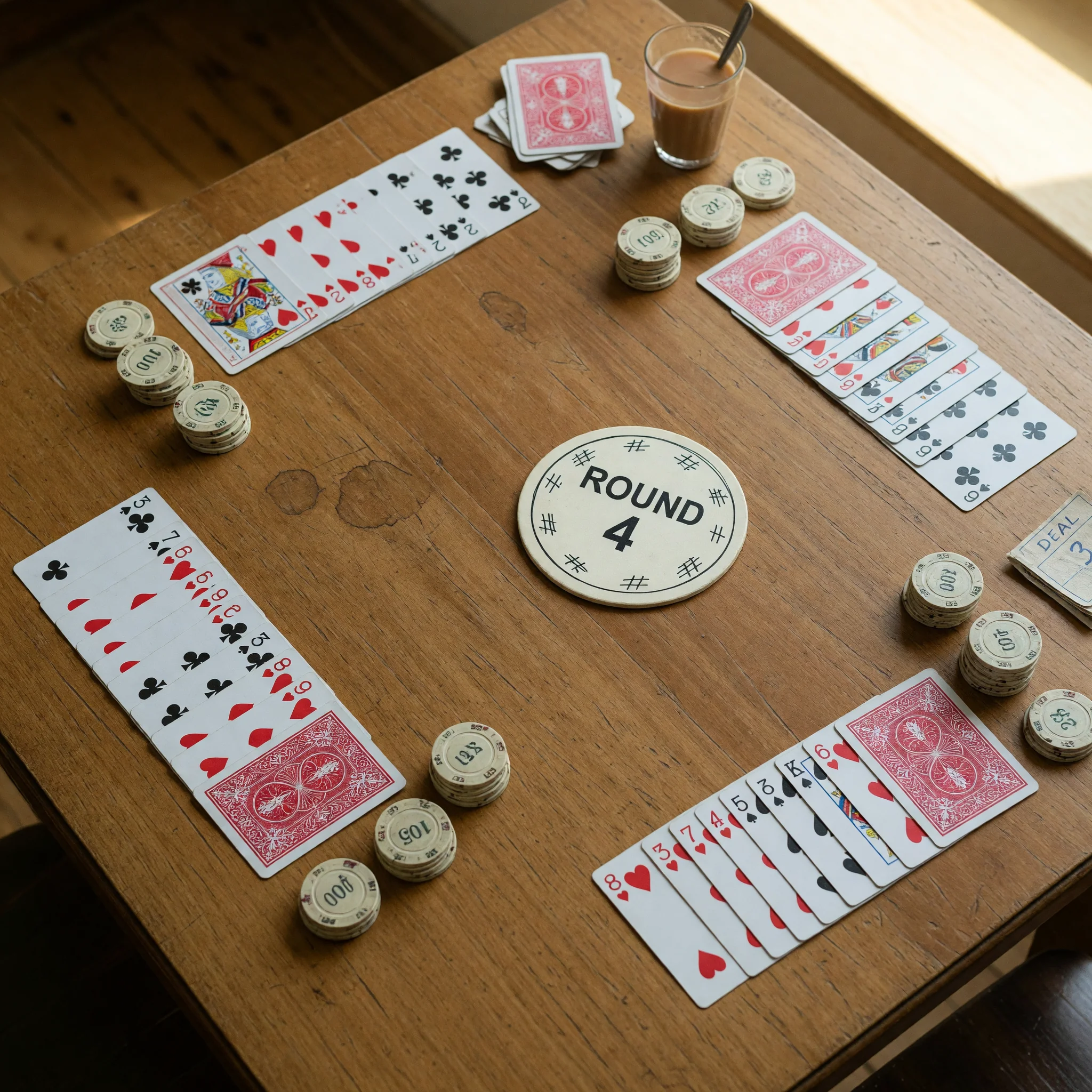
Deals Rummy is a pre-dealt format. The dealer distributes a fixed number of hands to each player, and the round is decided by the cumulative score across all the deals. The joker is set, the deal pattern is set, and the score limit is set — what changes is the order in which the cards come out and the way the table responds.
Deals Rummy sits between Points and Pool in tempo — twenty to forty minutes a session, lower variance than Points, higher than Pool — and rewards players who read the discard pile across multiple deals. The state of the open pile carries over between deals, so card-tracking discipline matters more here than in any other format.
Gin Rummy — the two-player variant
Gin Rummy is the two-player variant imported from North America and played in some Indian rooms as a side game. Each player gets ten cards, the melds work the same way, and the round ends on "knock" — laying your hand face-up and conceding the deadwood count. Gin is a tighter, more analytical game; a new player usually finds it harder to read than 13-card.
Rummy 500 — the family-room variant
Rummy 500 is a melding game for two to eight players where players can pick up multiple cards from the discard pile and lay them down immediately. Scoring is bonus-heavy — players earn points for melds, canonyms and going out. The variant is common in family play and rarely appears as a real-money room.
Which format should a new player start with?
Points Rummy, without question. The session is short, the math is direct, the consequences of a misstep are visible within the round. Once a new player can declare on at least one pure sequence without thinking about it, Pool Rummy becomes a richer experience because the round math rewards drop discipline. Deals Rummy is the format for players who want to practise card tracking — the open pile state carries over and reads are sharper when the deal pattern is set.
Format questions, answered
Are there any other formats beyond Points, Pool and Deals?
Yes — Gin Rummy (two-player), Rummy 500 (family-room variant) and several tournament variants. Most licensed real-money rooms stick to Points, Pool and Deals. The variant of choice for the betvictor desk is Gin, played at low stakes as a side game.
Which format has the lowest variance?
Deals Rummy has the lowest variance per session, because the deal count is fixed and the score limit is fixed. Pool Rummy has the highest variance per session because a single bad round can knock you out.
Which format is most popular in India?
Points Rummy is the dominant format by player count. Pool Rummy is the format that dominates by hours played. Deals Rummy is the smallest of the three by volume but has the most loyal regulars.
Is there a beginner-friendly format with real stakes?
Yes — every licensed room runs a Points Rummy table at the lowest stake, often at ₹0.5 / point or ₹1 / point. New players should start there.
What is a "drop" in rummy?
A drop is folding the hand before declaring. A first drop costs 25 points; a middle drop costs 50 points; a full count is the face value of unmatched cards up to the limit. Drop thresholds are heuristics, not rules — see the strategy page for the math.