On this page
Step 01 · The deal
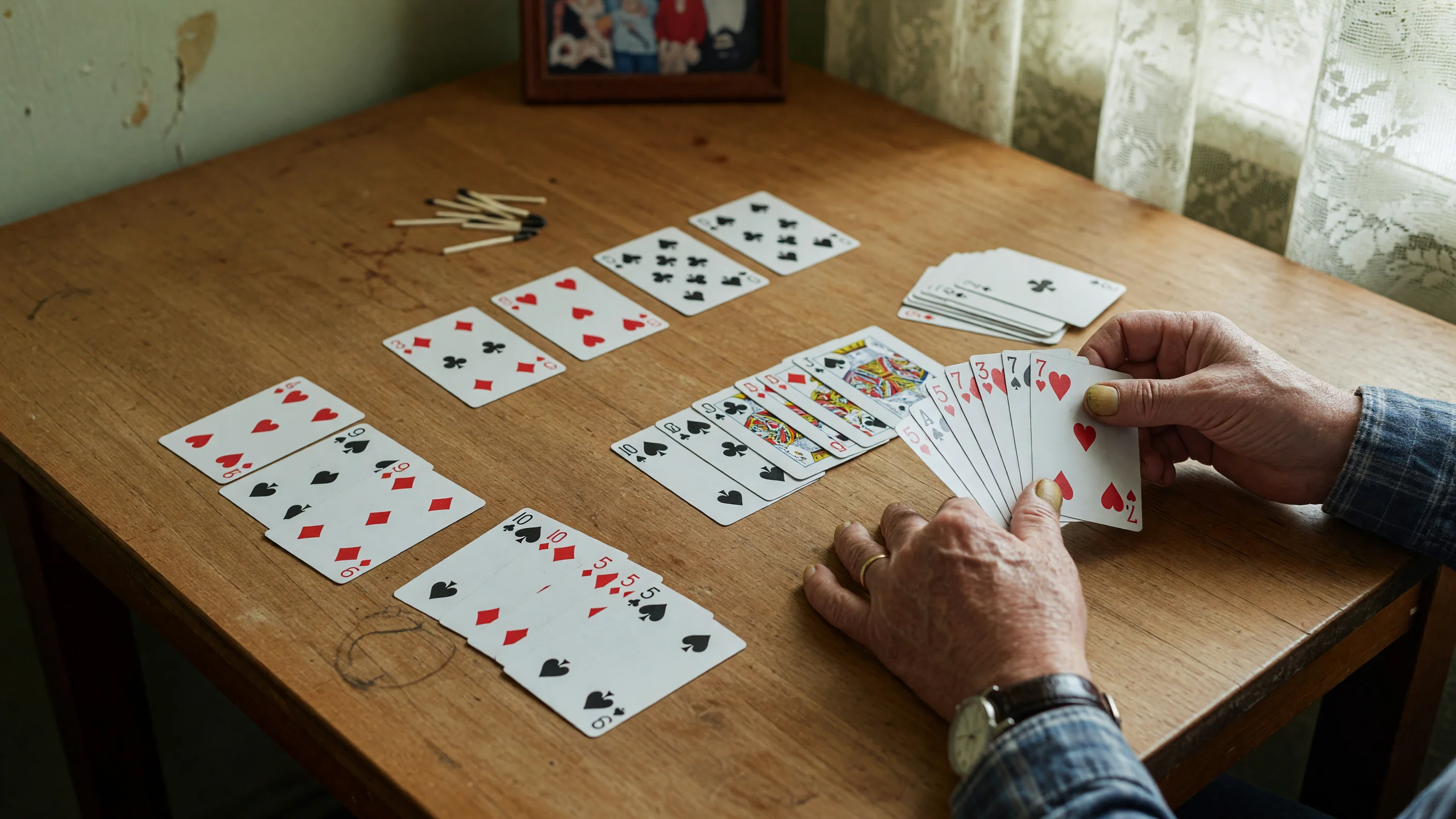
Each player receives thirteen cards, face-down. One card is flipped face-up and placed beside the stock as the first open discard. The remaining stock sits face-down beside it. In a two-player game the dealer deals ten cards each and the stock is smaller; in the four-player version it is thirteen cards each. The player to the dealer's left picks first.
Step 02 · Pick from open or closed
On your turn, you pick one card — either the top of the face-up discard pile or the top of the closed stock — and add it to your hand. That is the only card you get this turn. Picking from the closed pile is the safe default; picking from the open pile is faster but signals to the table what you are trying to build.
Reading hint
If you pick from the open pile, the next player can infer something about your hand. A pick that completes a sequence is rarely an accident. Pick from the open pile when the card is cheap and the signal is something you want the table to see.
Step 03 · Group cards into melds
A meld is a valid grouping of three or more cards. There are two kinds: sequences (cards in consecutive order, same suit) and sets (cards of the same rank, different suits). You do not have to declare melds in the middle of the hand — you can lay them out in front of you to read the board, but they are not committed until you declare at the end.
Step 04 · Pure sequence
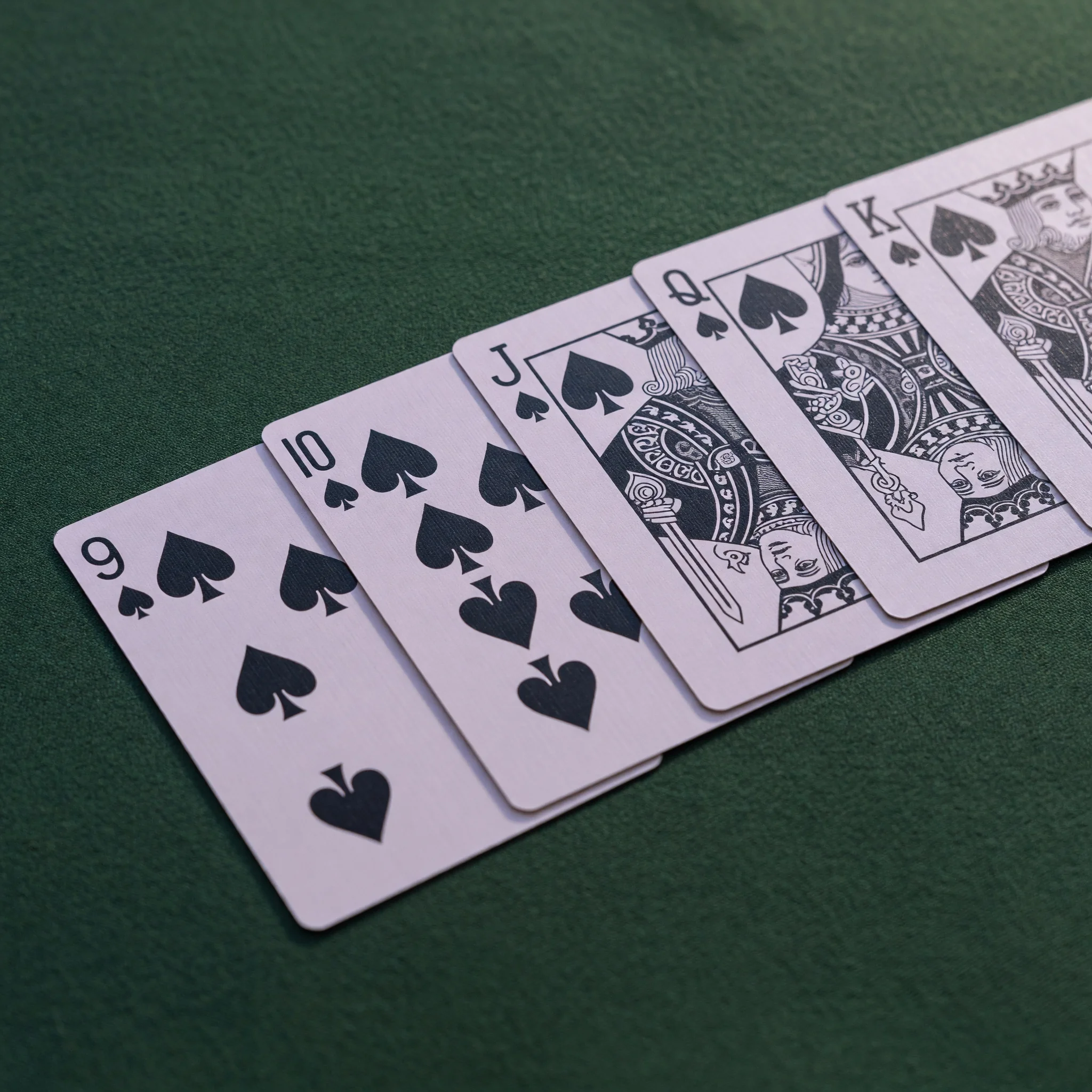
A pure sequence is a run of three or more consecutive cards of the same suit, with no joker involved. 4-5-6 of spades is a pure sequence. A-K-Q of hearts is a pure sequence. A valid declaration must include at least one pure sequence — there is no exception to this rule, and it is the first thing the table checks when you lay down your hand.
Step 05 · Impure sequence
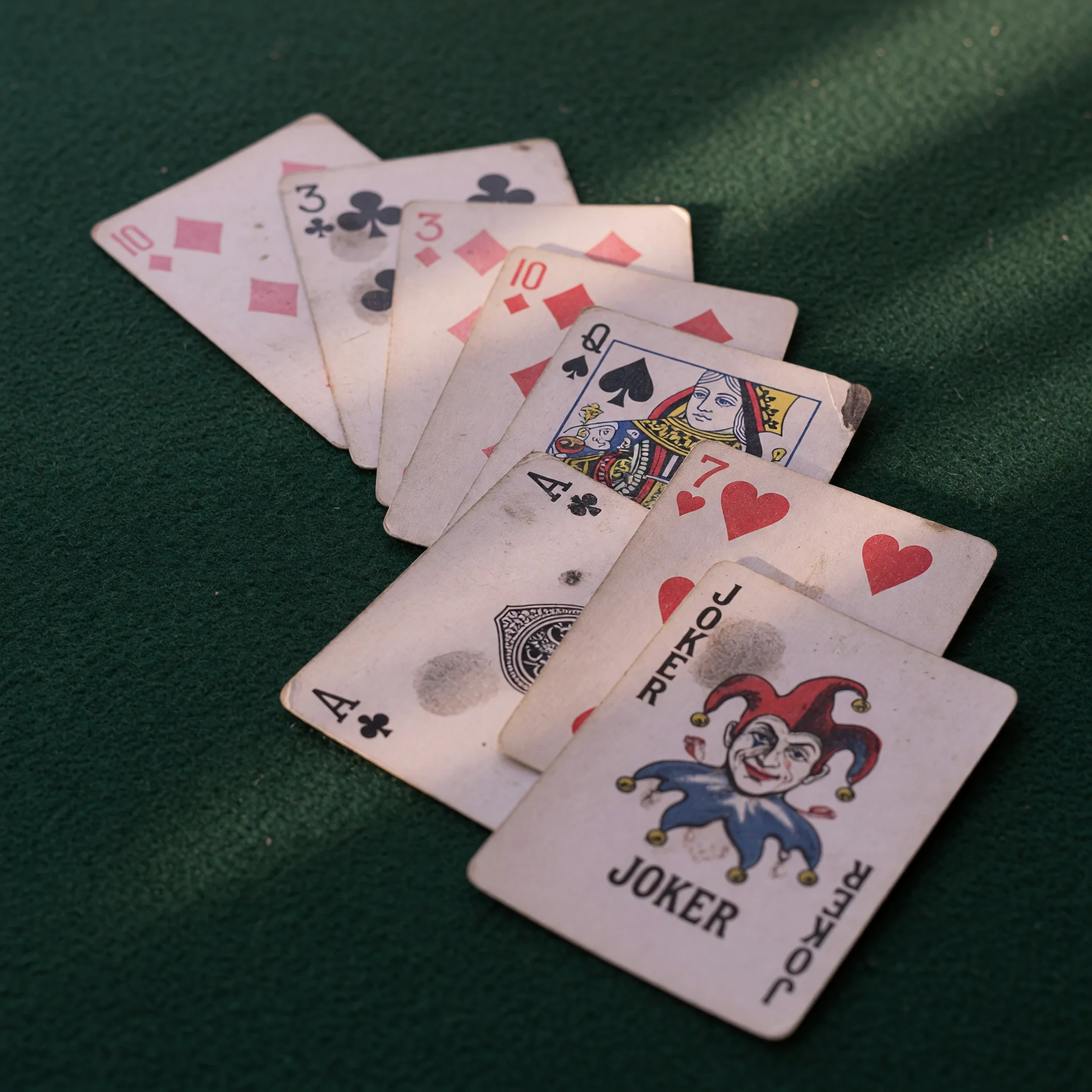
An impure sequence is a run of consecutive cards of the same suit where one card is a printed joker or a wild joker standing in for the missing rank. 4-joker-6 of clubs is an impure sequence. The joker behaves as the missing card and is committed when the sequence is declared.
Step 06 · Set
A set is three or four cards of the same rank in different suits. Three 7s — one heart, one diamond, one club — is a set. Four 9s is a set but only if the table allows four-card sets (most do; check before you declare). Sets cannot include two cards of the same suit — the second 7 of hearts would have to be dropped or used in a different meld.
Step 07 · Discard one card
After your pick and your read of the board, you discard one card face-up into the open pile. The discard signals your intent to the rest of the table — and signals you do not want. Beginners tend to discard high cards; experienced players discard the card that completes the fewest melds for the next player.
Common mistake
Discarding a wild joker by accident is the single most expensive mistake a new player makes. The joker is the most flexible card in the deck; if you cannot see how it fits in your hand, hold it.
Step 08 · Drop early when the math stops
You can drop at any point in the hand. A first drop (before your third turn) costs 25 points; a middle drop costs 50; if the round goes to a full count, your unmatched cards are scored up to the limit. Drop thresholds are heuristics, not rules — we model them on the strategy page.
Step 09 · Declare to end the hand
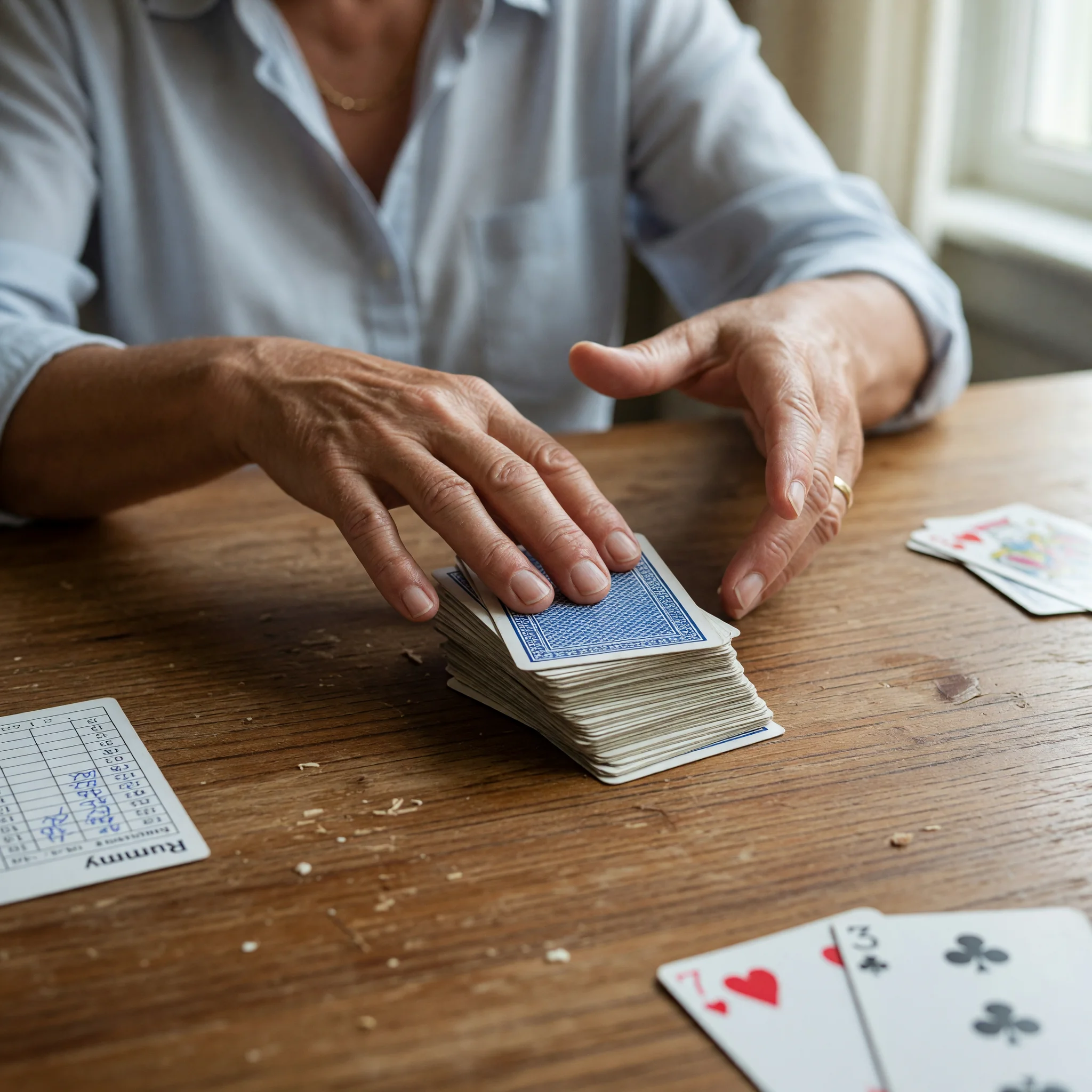
To declare, you discard your final card face-down and announce the call. You then arrange your 13 cards into melds on the table. The table checks for at least one pure sequence, the total deadwood, and the validity of every meld. If everything is in order, the showdown begins.
Step 10 · Showdown and scoring
The other players' hands are revealed. Each player counts the face value of their unmatched cards. The declarer scores zero (or wins the pot). Every other player pays the value of their deadwood to the declarer up to the score limit. The round resets.
You have the rule book
You now know how a 13-card rummy hand is decided. The next page — the strategy ledger — shows you how to read the discard pile, when to drop and how to think about joker usage across formats.
Beginner questions, answered
How long does a Points Rummy hand take?
Five to fifteen minutes for a typical hand at a six-seat table. The variance comes from how quickly a player declares; an early declaration speeds the hand up, a long run-out keeps the deadwood climbing.
Can I see other players' cards during the hand?
No. Cards stay face-down except for the discard pile and the cards you lay out as you build melds. The dealer's job is to keep hands hidden and to keep the discard pile honest.
What happens if two players declare at the same time?
The first player to lay all 13 cards face-down wins. The order is recorded by the dealer or, in online play, by the platform's timestamp. A "showdown race" rarely happens at lower-stakes tables because players usually drop instead of racing.
Do I have to declare in my first turn?
No. You can take any number of turns before declaring. Some hands go twenty turns before a player declares; others end in five. The choice of when to declare is a strategy decision covered on the strategy page.
What is an "invalid declaration"?
An invalid declaration is one that does not include at least one pure sequence or includes a meld that is not actually valid. The penalty varies by room — most rooms charge the maximum score and assign the win to the next valid hand. Invalid declarations are rare at serious rooms; we have seen them mainly in family play.