Deposit limits — the first control
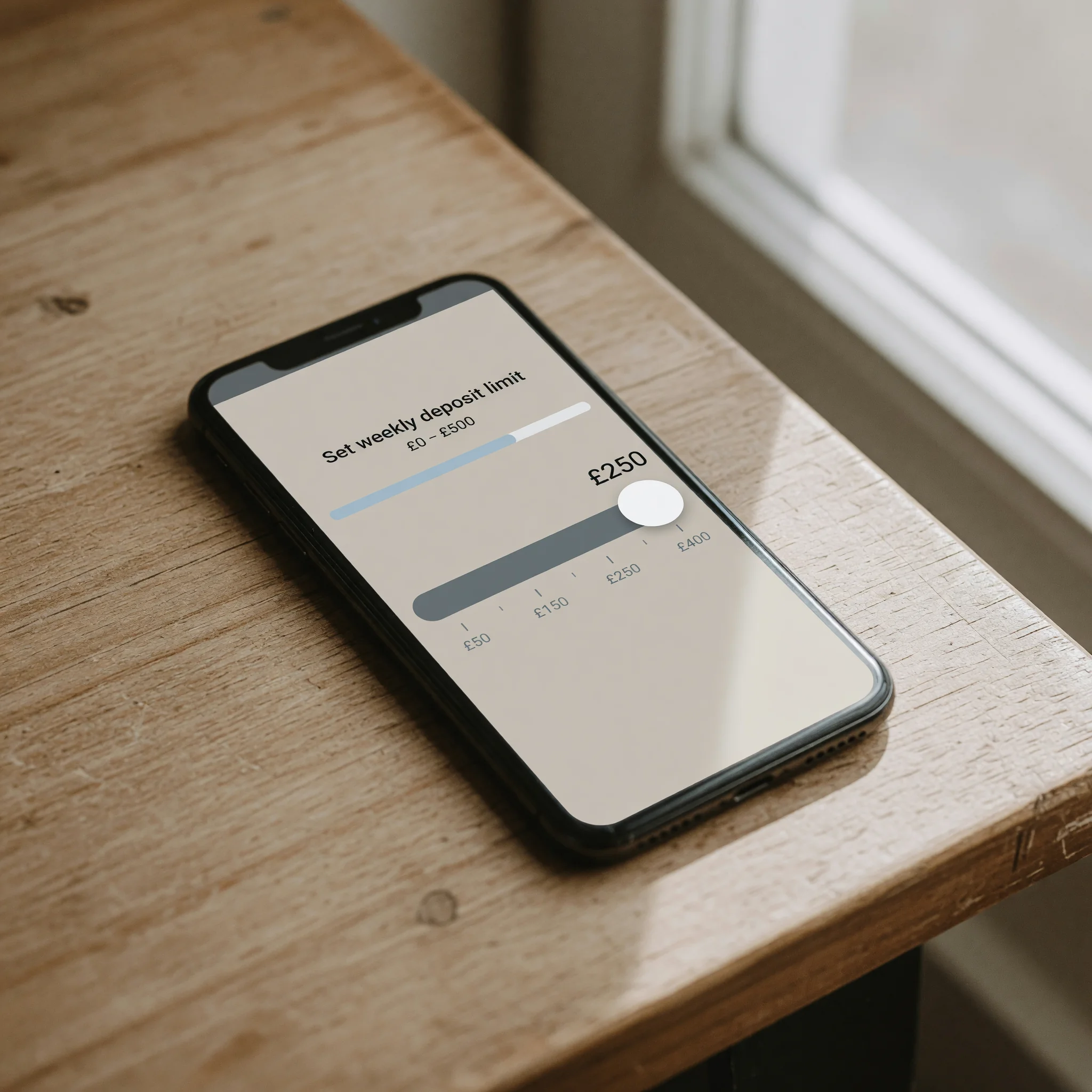
The deposit limit is the single most useful control a rummy reader can set. A licensed operator surfaces it before the first deposit and any time after, inside the wallet or the responsible-play screen. The limit should be a daily, weekly, and monthly value — not a single point.
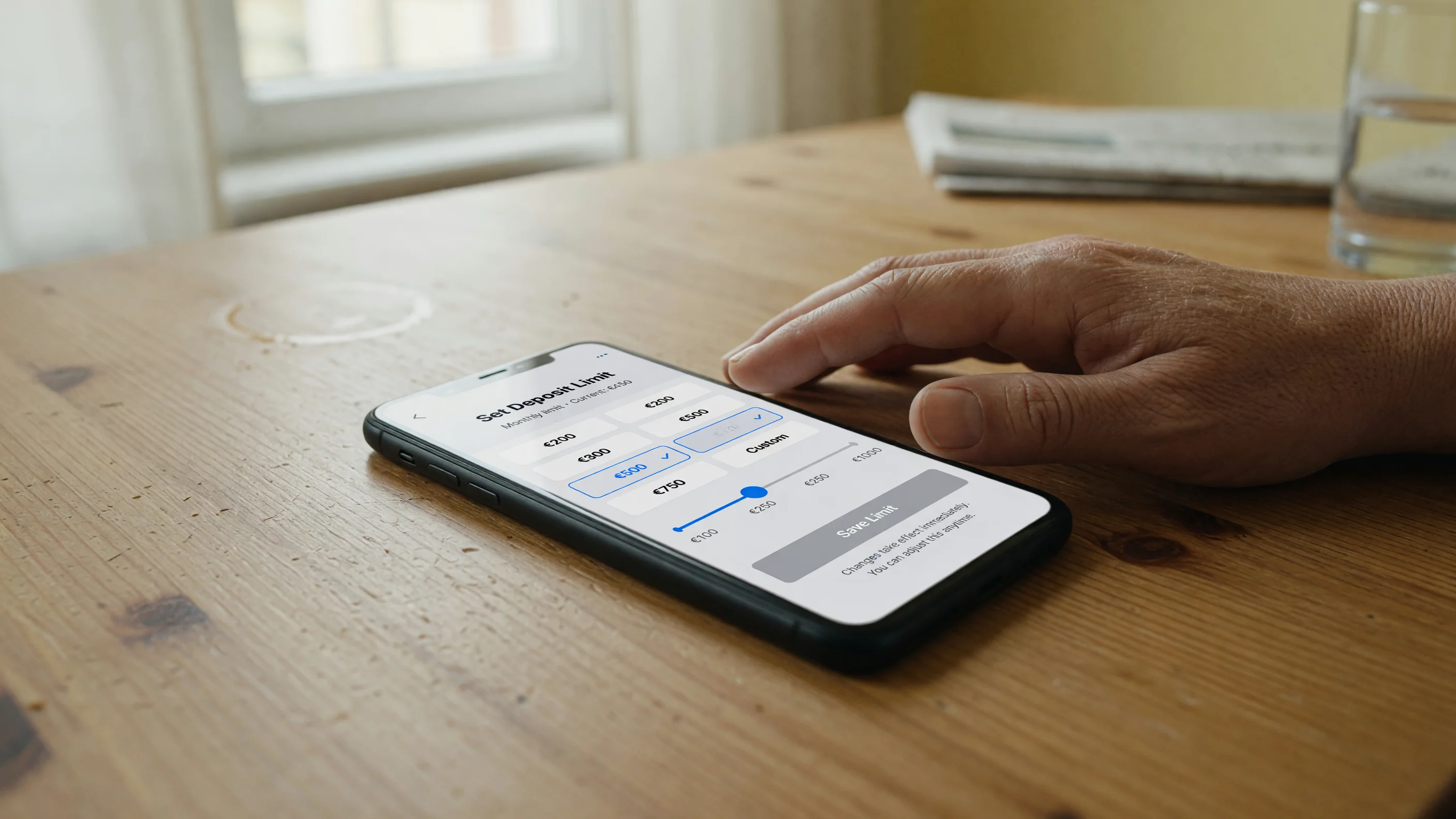
The default for a new player should be small. ₹500 a day is a reasonable starting cap for a beginner; intermediate players often set the cap at ₹2,000–5,000 a week. The cap is adjustable upward after a 24-hour cool-off and downward at any time. There is no advantage to setting the cap high — a session that needs a high cap is a session that has lost its discipline.
Session timer

A session timer logs the elapsed time in a session and triggers an automatic logout after a fixed idle window. The idle window is platform-defined — usually 15 to 30 minutes — and the timer resets on any pick or discard. The timer is the second-most useful control after the deposit cap.
For beginners, a 30-minute session timer is the right default. Intermediate players often extend to 60 minutes; competitive players rarely set a timer above 90 minutes. A timer above 120 minutes should be a deliberate decision, not a default.
Reality check
A reality check is a periodic interrupt that shows the session time, the net position, and a "continue / end session" prompt. Most regulated jurisdictions require a reality check at 30, 60, 90, and 120 minutes. The reality check is not a penalty — it is a moment to decide whether to keep playing or to step away.
The desk recommends a 30-minute reality check for new players. The check is the single best moment to drop a losing session; the average adult rummy reader who acts on the reality check at 30 minutes reduces their session loss by half.
Self-exclusion

Self-exclusion is the strongest control. A self-excluded account is blocked from deposit, play, and login for a fixed window — typically six months, twelve months, or permanent. The exclusion is irrevocable for the window; the platform will not lift it on request.
The minimum useful exclusion is six months. A shorter window — a "cooling-off" period of 24 hours or seven days — is useful for mid-session discipline but is not a substitute for a longer exclusion when a pattern of loss is repeating.
Helplines
If a session loss has become a financial worry, the right first call is a helpline, not another session. The two most widely cited Indian helplines are iCall (9152987821) and the Vandrevala Foundation (1860-2662-345). Both offer confidential support in English and several regional languages. GAM-ANON support groups run parallel in major cities.
The controls checklist
Before your first deposit, confirm these four controls are visible:
- Deposit cap with daily, weekly, and monthly values
- Session timer with a configurable idle window
- Reality check at 30 minutes or earlier
- Self-exclusion with a six-month minimum window
If any control is missing or hidden, choose another operator. The controls directory is the contract; a platform that hides the controls is not honouring the contract.
Responsible-play questions, answered
Can I set a deposit cap lower than the platform's default?
Yes. The cap is the customer's, not the platform's. You can set any value at or below the platform's maximum. Most platforms allow a ₹100 daily minimum.
How do I lift a self-exclusion?
You cannot lift a self-exclusion during its window. After the window expires, the account is restored and you can resume play. The platform sends a reminder before the restoration.
What if my deposit cap doesn't seem to be working?
Stop play and contact the platform's customer care. A misconfigured cap is a safety incident; the platform is required to investigate and correct it.
Should I tell my family about my play?
Yes. The desk recommends a transparency rule: tell at least one person in your household the deposit cap and the controls you have set. The rule is the single most useful behaviour change a reader can adopt.
Where can I read more about gambling-related support?
The customer care page lists the helplines and support organisations we work with. The helplines are confidential.