Drop thresholds, modelled

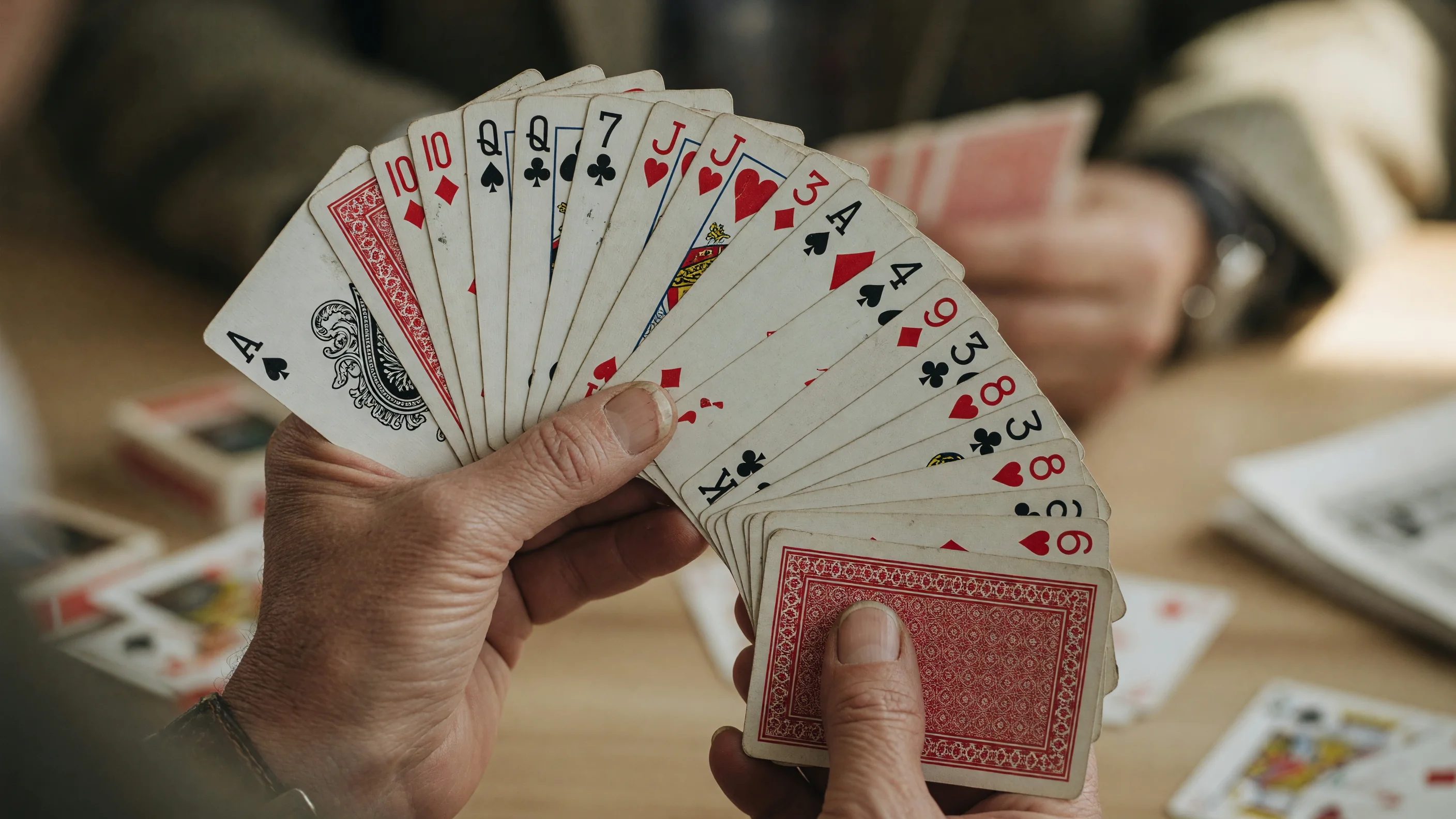
A drop is a fold. The score cost depends on when you make it: a first drop (before your third turn) costs 25 points; a middle drop costs 50 points; a full count charges you the face value of your unmatched cards up to the limit, usually 80. Drop thresholds are heuristics — there is no rule that says "drop at 79", but the heuristic is widely used.
Beginners drop too late. They hold on hoping the next pick completes a meld, and the round runs out, and the deadwood climbs, and the cost of the full count becomes the cost of a bad session. Experienced players drop earlier, accept the 25-point cost, and move to the next hand.
The threshold that works for most beginners: drop if your first seven cards contain no card that can fit into a pure sequence and you have not seen a useful pick by your third turn. That heuristic keeps you out of the worst 20% of hands, which is where the score penalty lives.
Card tracking

Card tracking is reading the open pile. After every discard, the pile records what the table is not trying to build. The discipline is to remember, group and read the pile as a probability ledger rather than as a list of cards.
The practical approach: count by suit and rank. If you have seen four 7s in the open pile, the fifth 7 is in someone's hand or in the closed stock — and your chance of completing a set of 7s has dropped. If you have seen six hearts in the open pile, you can no longer hope for a heart sequence. The tracking is rough, but it informs when to drop and when to commit.
Tracking gets sharper with format. In Deals Rummy the open pile carries over between deals, so the cumulative count reads across the whole session. In Points Rummy the pile resets each hand, so tracking is one round deep.
Joker usage in impure sequences
A joker substitutes for the missing card in an impure sequence. The trade-off is that the joker is committed once the sequence is declared, so you cannot also use it to fill a set or a different sequence. Two heuristics:
- Use the joker in the impure sequence that completes your declaration. The alternative — using the joker as a high-value wildcard in a set — usually wastes its potential.
- Hold the joker until you can see how it fits. A wild joker picked up in turn three can be useful in turn seven; a wild joker discarded in turn two because you cannot read the hand is a wasted pick.
Odds and meld probability
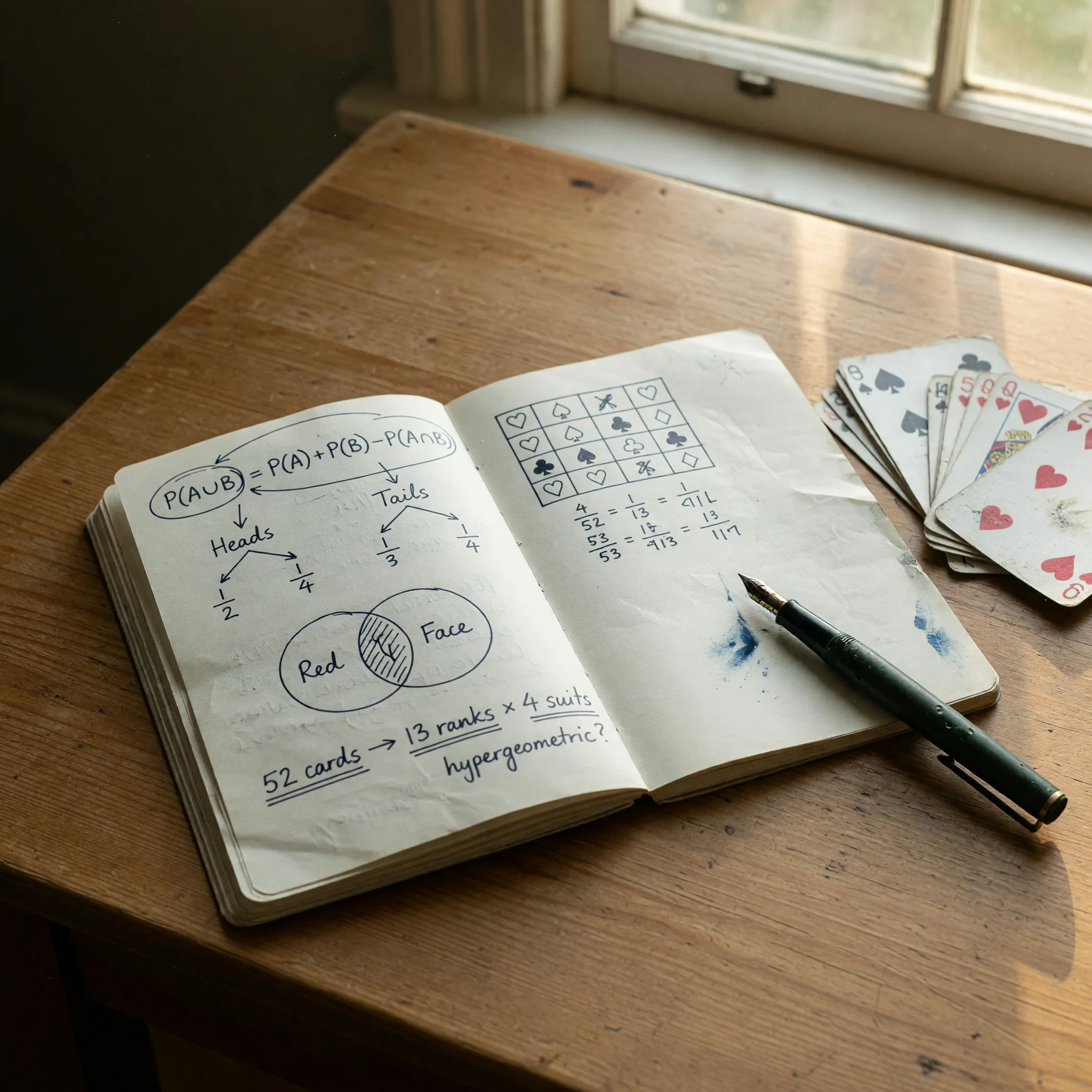
The basic odds in a 13-card rummy hand: by your seventh card, you have a roughly 60% chance of seeing at least one pure-sequence starter. By your tenth card, the chance climbs above 85%. These are rough averages — variance in the deal and the joker distribution push the numbers around — but they are useful as a sanity check when you are deciding whether to keep picking or to drop.
The probability of completing a pure sequence improves sharply when you pick from the closed stock. The closed stock is unknown to the table; the open pile is partially known. A pure sequence built from closed-stock picks is harder for the table to read and harder to defend against.
Format-specific notes
Points Rummy
The shortest session, the highest variance. Drop early on bad hands, push for fast declarations on good hands. Card tracking is one round deep.
Pool Rummy
The round math rewards survival. Drop discipline matters more than meld speed. Card tracking is round-deep, but the cumulative score across rounds shapes your table image.
Deals Rummy
The state of the open pile carries over between deals. Card tracking is session-deep. The format rewards players who can read discard pile state across multiple deals.
Reading the room
Online play strips out body language. What you have instead is discard pile state and pick timing. A player who picks from the closed stock on every turn is building defensively; a player who picks from the open pile often is signalling an aggressive build. Read those patterns. They are the body language of an online rummy table.
Strategy is not a guarantee
The decision rules above reduce variance. They do not eliminate it. The right drop threshold on a bad hand still loses the round; the right card tracking on a good hand still loses to a player who picked a closed-stock pure sequence on the last turn. Read the rules, then play within your own limits.
Strategy questions, answered
Is card counting legal in rummy?
Yes. Tracking the discard pile is a standard skill-game practice and is permitted at licensed rooms. What is not permitted is using any external aid — a notebook, a phone, or a hidden accomplice — to track cards. The desk takes a dim view of any player who uses one.
What is the safest drop threshold for a beginner?
Drop on your first turn if your hand has no sequence starter and no obvious set. A first drop costs 25 points; that is cheaper than the 80-point full count you risk by staying in a hopeless hand.
When should I push for an early declaration?
Push for an early declaration when you have a complete valid hand by your fifth or sixth turn. An early declaration scores the same as a late declaration but reduces the time your opponents have to read your discard pile.
How do I read a player who picks from the open pile often?
A player who picks from the open pile often is signalling an aggressive build. They are willing to reveal what they are trying to complete in exchange for a faster meld. The trade-off is that the rest of the table can defend against them.
Is there a "guaranteed win" rummy system?
No. Anyone selling a guaranteed-win rummy system is selling false certainty. Strategy reduces variance and improves your average session. It does not eliminate the underlying probability distribution of the deal.